Community coordination, built around local control.
Communities need to coordinate across roles and regions while retaining control of their information. I’m building ART to connect reporting, dispatch, and training around that constraint.
I designed ART’s ecosystem of reporting, regional dispatch, and training around local control of sensitive information.
I built the regional application template, shared packages, and interfaces for dispatch and Academy available in the public repository.
I documented the regional architecture and phased build plan, including the direction for offline continuity and further hardening.
ART / COMMUNITY INFRASTRUCTURE
Dispatch
Academy
REPORT → COORDINATE → TRAINALWAYS READY TOOLS
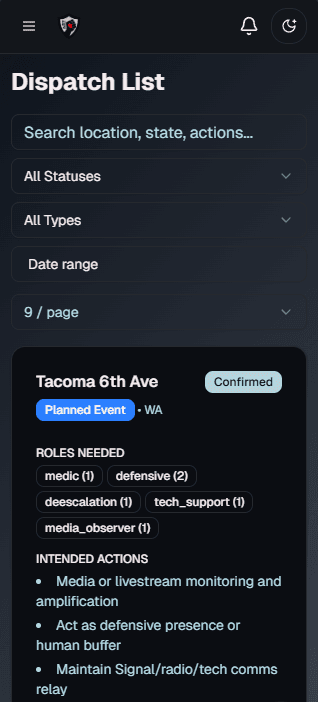
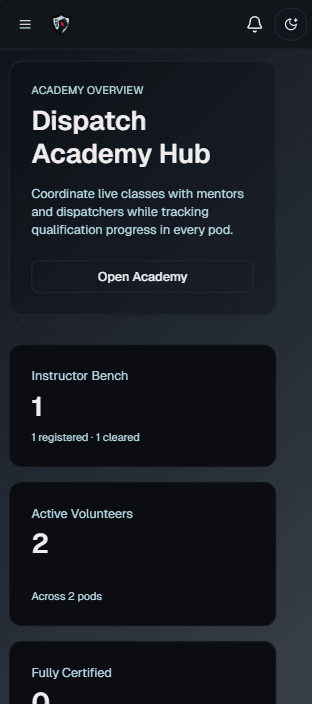
Dispatch and Academy interface images from the public ART repository. Displayed counts and dispatch content belong to those product images. View source (opens in a new tab) ↗
01 / The challenge
Coordinate without centralizing control.
A single centralized platform makes collaboration easy to picture, but it can put too much sensitive information in one place. ART’s design asks a different question: how can communities share the signals they need while keeping volunteer and incident information local?
02 / Design & engineering
The decisions that shape the system.
01
Regional ownership is the foundation
The documented architecture calls for each region to have its own database and deployment. Shared code supports consistent workflows, while regional boundaries define where sensitive information is intended to remain.
02
Separate coordination from sensitive records
Watch, regional dispatch, Academy, and administration have different responsibilities. The architecture separates coordination metadata from volunteer rosters and raw incident records, which are intended to remain within their region.
03
Connect training to operational responsibility
The Academy and onboarding model connect learning with volunteer roles. Offline continuity through PocketServer is part of the documented product direction, alongside regional trust and recovery workflows.
Simplified view of the documented ART architecture. Offline continuity and further hardening remain part of the published build plan.
03 / Delivery & direction
What you can inspect today.
The public repository includes the regional application template, Academy, Watch, shared packages, and region-scaffolding tooling. Public product images show dispatch filtering and the Academy overview. Together, the code, architecture documentation, and product interfaces make the project’s foundation available to inspect.
Continuing direction
The published build plan includes offline synchronization, regional status reporting, and further hardening. I treat those roadmap goals separately from the interfaces and code available to inspect today.